How to Remove Gel Nail Polish at Home Without Damaging Your Nails
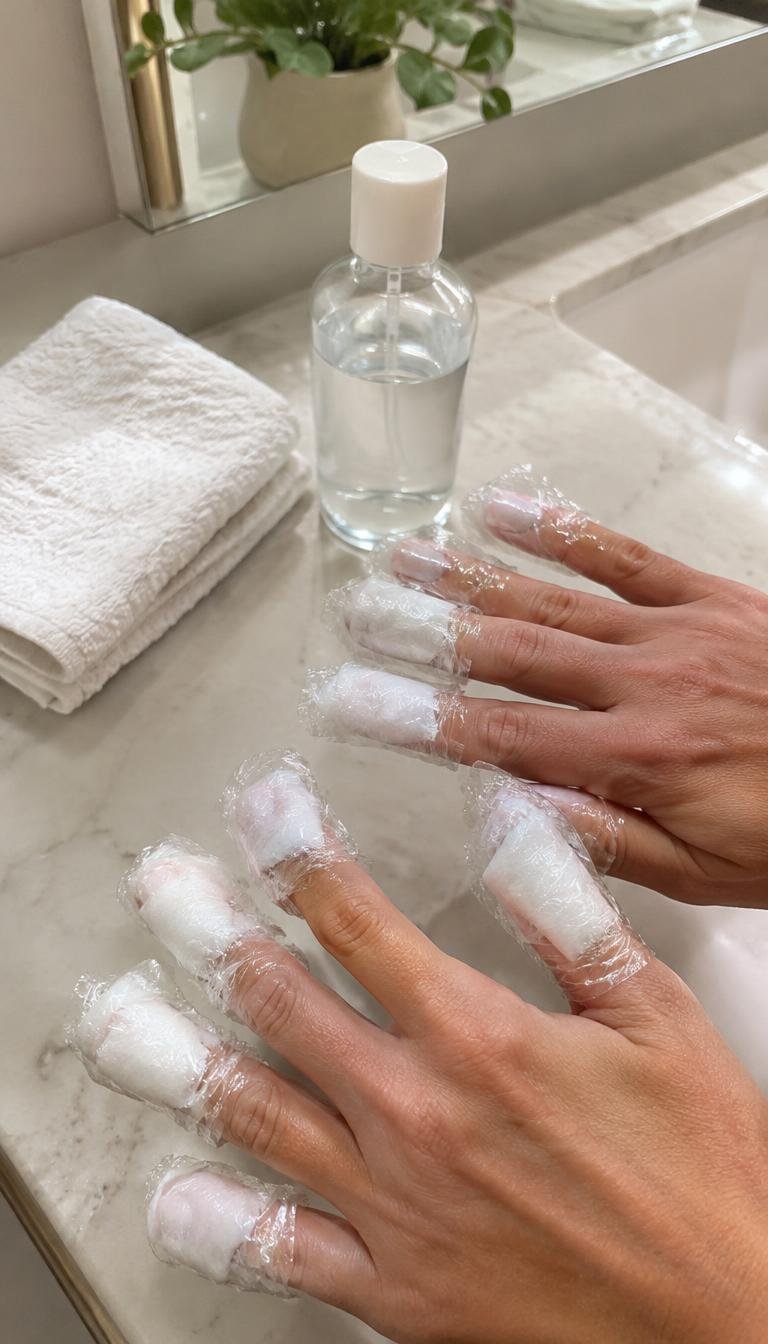
You can remove gel polish at home in about 10 minutes of soaking, using 100% acetone, cotton, plastic wrap and a little petroleum jelly. Gel polish is a long-wear color that cures under a lamp, so it needs a soak to let go. This guide shows you how to do it safely.
When a manicure starts lifting at the edges, the urge to peel it is strong. Please don’t give in. Gentle soaking beats force every time, and your nails will thank you.
This method suits anyone who wears regular gel polish. Thicker gels need a few extra steps. Rushing is the real enemy of healthy nails, so set aside half an hour and a comfortable spot.
Key Takeaways
- Soak gel polish in 100% acetone for about 10 minutes instead of peeling it.
- Protect your cuticles and surrounding skin with petroleum jelly first.
- Builder gel needs filing before soaking, and hard gel must be filed off.
- Rub petroleum jelly into your cuticles daily for seven days afterward.
- Skip the orange stick, since it can cause white spots.
- Open a window while you work with acetone.
- Growing gel out takes about six months for a fingernail.
Why Peeling and Picking Gel Polish Hurts Your Nails
Gel polish is built to cling, so pulling it off usually takes some of your nail along with it. Each strip you rip away can lift thin layers of the nail plate, leaving the surface rough and weak.
Dermatologists link frequent gel manicures and rough removal to problems such as allergic reactions, nail lifting and brittle, peeling nails. Onycholysis means the nail plate lifting away from the nail bed. The same review named at-home manicures as a risk factor, along with acrylates, isocyanates and ultraviolet light.
Because at-home manicures are a named risk factor, your removal technique matters as much as your polish. Never rip off a lifting edge.
That doesn’t mean gel always harms nails. It does mean that careless removal gives problems a place to start.
If a nail looks lifted, painful, red or swollen after removal, pause gel and ask a doctor or dermatologist.
What to Gather and How to Set Up Your Workspace
Set your supplies on a thick towel over plastic wrap before you open the acetone, since acetone can ruin finishes on sinks, countertops and furniture. Lay the plastic wrap down first, then the towel on top. Then you can work without worrying about spills.
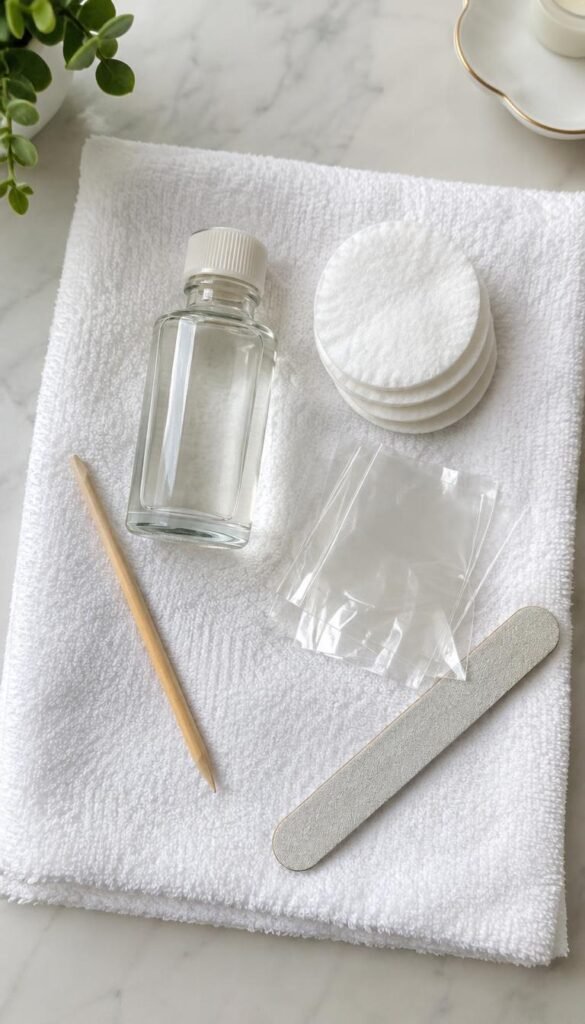
Gather these items so nothing sends you searching mid-soak, and keep them within reach of your seat:
- 100% acetone, since weaker removers soak slowly
- Cotton balls or pads
- Plastic food wrap
- Petroleum jelly
- A washcloth
- A thick towel
- A nail file, for thick gels only
This is the gel nail polish remover that works best for the job. Pour it into a glass dish, not plastic. A plastic bowl can melt under acetone, and a ruined bowl is a mess you don’t want.
Work near an open window so the fumes can clear. If you plan to remove gel nails at home often, keep a glass dish just for this.
Cut your cotton to roughly the size of each nail, which keeps acetone off your skin. Cut all ten cotton pieces before you wet any of them, so your hands stay free once the acetone is out.
How to Remove Gel Nail Polish at Home, Step by Step
Plan on 10 minutes of soaking per hand, and the polish should mostly slide off with a gentle wipe. This is how to take off gel nail polish without a single scrape. Work on one hand at a time so the wraps stay snug.
Follow these steps in order. Leave the wrap on for the full 10 minutes, even if it feels slow.
- Spread a thin layer of petroleum jelly on each cuticle and the surrounding skin.
- Soak a cut piece of cotton in 100% acetone.
- Press the cotton onto the nail, then wrap the fingertip tightly in plastic food wrap.
- Repeat for each nail on that hand, then wait 10 minutes.
- Unwrap and rub the nail gently with a washcloth freshly run under warm water.
Rub only the nail, not the skin around it. Most or all of the gel polish should come away. If you want to know how to get gel nail polish off for good, this patience is the whole secret.
Some spots may hold on, especially near the cuticle or where you applied a thick coat. Don’t scrape them. Soak fresh cotton in acetone and re-wrap that one nail for a few more minutes.
Then switch to the other hand and repeat. If a patch stays put, re-wrap that nail for a few more minutes instead of forcing it.
Taking Off Builder Gel, BIAB and Hard Gel
Regular gel polish soaks off, but thicker products need more work, and hard gel cannot be soaked at all. Builder gel (BIAB) is a thick, strengthening layer, often worn under color. Hard gel is a firmer type that only filing removes.
Check the table to see which product you wear and what removal it needs.
| Product | Soak it off? | File first? | Best place |
|---|---|---|---|
| Regular gel polish | Yes | No | At home |
| Builder gel (BIAB) | Yes, after filing | Yes, most of the thickness | Home or salon |
| Hard gel | No | Yes, filed off fully | Professional |
With builder gel worn under gel polish, you need to file down more of the thickness before the acetone can reach through. File gently and stop before you touch the natural nail. Then follow the usual soak.
The mistake to avoid is treating a thick overlay like regular polish. It will not soak through, and you will end up peeling it. Hard gel is best left to a professional manicurist.
When you are not sure which product you wear, ask your manicurist at the next appointment.
Aftercare for Your Nails and Skin
Wash your hands with gentle soap and water as soon as the last wrap comes off. This clears leftover acetone, which leaves skin dry and tight. Then rub petroleum jelly into your cuticles and surrounding skin daily for seven days.
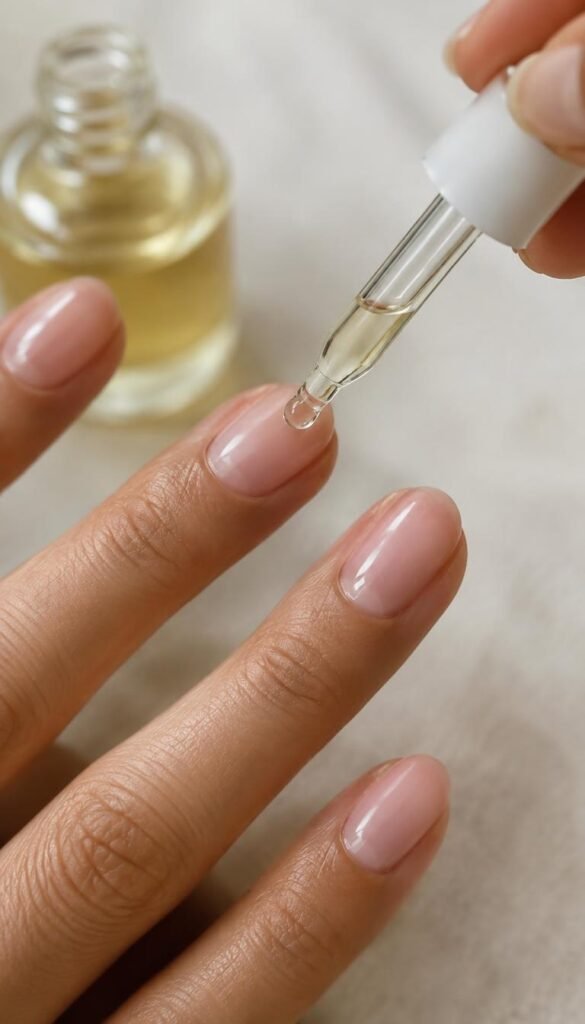
Nails are often thinner and softer right after a soak, so treat them kindly. This routine is the next step after you learn how to remove gel nail polish, and it matters just as much. A good gel nail polish remover does its job fast, but it needs a little repair work after.
- Wash with gentle soap and water right away.
- Rub petroleum jelly into cuticles daily for seven days.
- Keep nails short while they recover.
- Let nails go bare for a few days if you like.
Short nails snag less, which gives weak spots time to grow out. Going bare for a few days lets you see how your nails really look. Don’t skip the jelly just because your nails seem fine.
Keep the petroleum jelly by your bed so you remember it for the full seven days.
Habits That Damage Nails During Removal
The orange stick that came in your manicure kit is the wrong tool here, since it can injure the nail and cause white spots. Picking or filing gel polish off can also damage nails significantly. A few common shortcuts cause most of the harm, and each has a better move.
Picking at a lifted edge pulls up layers of nail with the color. Instead, soak that nail and let the acetone loosen the polish. Filing through the color down to the natural nail thins it fast. Stop filing once the shine is gone, or skip filing for regular polish and soak.
Cutting the soak short feels harmless, but it leaves polish stuck on, and you end up scraping. Set a timer for 10 minutes and use it. A timer keeps you honest when your patience fades.
Using the orange stick to nudge softened polish seems gentle, yet its tip can dig into the nail surface. A washcloth works better and costs nothing. If you want to know how to get gel nail polish off without regret, tools matter less than restraint.
Knowing how to take off gel nail polish well means avoiding these four habits. When the urge to peel hits, grab a nail clipper and trim the lifted edge instead.
Can You Just Let Gel Polish Grow Out?
Yes, you can let it grow out, but expect about six months for a full fingernail and 12 to 18 months for a toenail. It is a real alternative to learning how to remove gel nail polish at home, and it skips the acetone.
Clip your nails once a week. This removes polish as it grows out and helps stop your nails from catching on clothing or other objects. Clip a little at a time so the nail stays even.
Fingernails make this option reasonable, since six months is long but doable. Toenails take far longer, so most people soak those off instead. If you want to take off gel nail polish without acetone, this is the way.
It suits people who want to avoid acetone. It does not suit anyone with a lifting or damaged nail, because trapped moisture and pressure can make it worse. In that case, remove the polish properly and see a doctor if needed.
Wear gloves for chores while the polish grows out so the lifting edges do not snag.
Staying Safe With Nail Products
Open a window before you start, because the FDA recommends good ventilation with nail products. Work in a ventilated room and follow the label directions on every product. The FDA says nail products sold in the United States must be safe when used as the label directs or in the usual way.
Even so, nail products can cause infections or allergic reactions. Watch your skin for itching, redness or swelling. Any of these means stop and report the problem to a doctor.
Acetone burns easily, so keep it away from flames, candles and stoves. Store the bottle with the cap tight and out of reach of children. A high shelf or locked cabinet works well.
If you remove gel nails at home often, check the label each time, since formulas change. A good gel nail polish remover still deserves respect.
Never use acetone near a flame, and keep every nail product where children cannot reach it.
Stop using any product that makes your skin itch, burn or swell, and see a doctor if it does not settle.
More nail inspiration: Elegant nails · Winter nails 2026 · Christmas nail inspo
Conclusion
Gentle soaking, not scraping, is what keeps your nails healthy. Once you know how to remove gel nail polish with acetone, cotton and a snug wrap, the job is simple and kind to your nails.
Moisturize afterward, too. A daily dab of petroleum jelly on your cuticles for a week helps your skin recover from the acetone.
Pick a quiet evening this week, gather your supplies and give your nails the careful removal they deserve.